

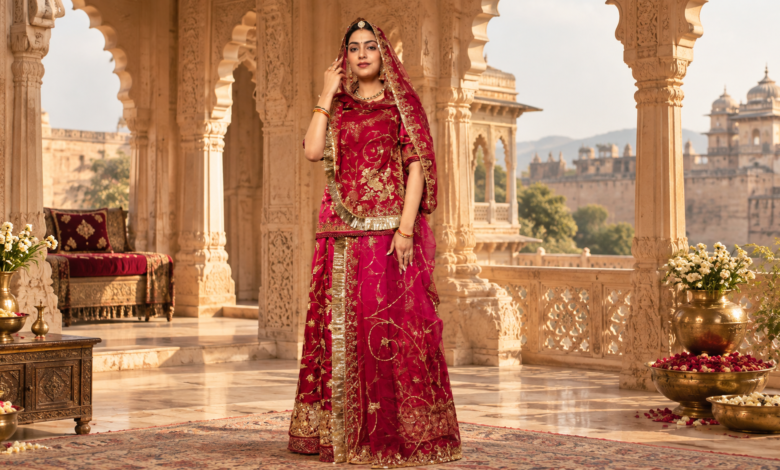
Rajasthani weddings have a grandeur most other functions just don’t match, and a good chunk of that comes down to what’s being worn. A rajputi poshak isn’t a random ethnic outfit picked off a rack – it carries centuries of royal Rajput tradition, and getting the best rajputi poshak for weddings takes more thought than most people expect. The cloth, the silhouette, the drape for that particular day – they all matter.
That said, when you have a rajputi poshak on your mind for your wedding, here’s what you need to know before making the purchase or booking the outfit.
What a Rajputi Poshak Actually Is
- In essence, a rajputi poshak is a three-part garment set comprising of a kurti or kanchli, a ghagra which has a flare skirt, and an odhni which joins the whole thing up.
- It differs from a common lehenga not only by the name but also the shape of it and the noble Rajput families it belongs to.
- That heritage still shows up in how most poshaks are cut and styled today.
- The kanchli sits close to the body and usually carries the most detailed work — mirror embellishments, gota patti, sometimes heavy zari embroidery.
- The ghagra is where the drama comes in; traditional designs can use anywhere between 10 and 20 metres of fabric just to get that sweeping flare when it moves.
- And the odhni – draped over the head and one shoulder in a very specific Rajasthani style – is what really pulls the whole outfit together.
Best Rajputi Poshak Designs Worth Considering for a Wedding
Wedding-appropriate rajputi poshak designs tend to run heavier and more ornate than the ones worn casually, which makes sense given the occasion. If you’re hunting for the best rajputi poshak for weddings, these are the styles worth shortlisting.
Gota Patti Poshaks
Gota patti poshaks are probably the most requested option right now. The gota work catches light without making the whole outfit feel weighed down, which matters more than people realise once you’re standing through a five-hour function.
Zardozi Rajputi Poshak
For the main ceremony itself, a zardozi rajputi poshak tends to fit better — the thread and metal embroidery gives it a richer, more formal finish that suits the seriousness of the day. Many consider this the best rajputi poshak for weddings when the occasion calls for something truly grand.
Mirror Work Poshaks
Mirror work is almost the signature of Rajasthani dressing, and it photographs exceptionally well, which is probably why it’s still the top pick for sangeet and mehendi.
Bandhani Poshaks
If heavy embroidery isn’t really the vibe, bandhani prints on the ghagra offer a quieter, more traditional look without going overboard on embellishment.
Pastel Rajputi Poshaks
And for anyone who wants something that still feels traditional but a touch lighter, designers have started playing around with pastel shades and simpler cuts on the kanchli — a good middle ground for daytime events.
Fabric Actually Matters More Than the Design
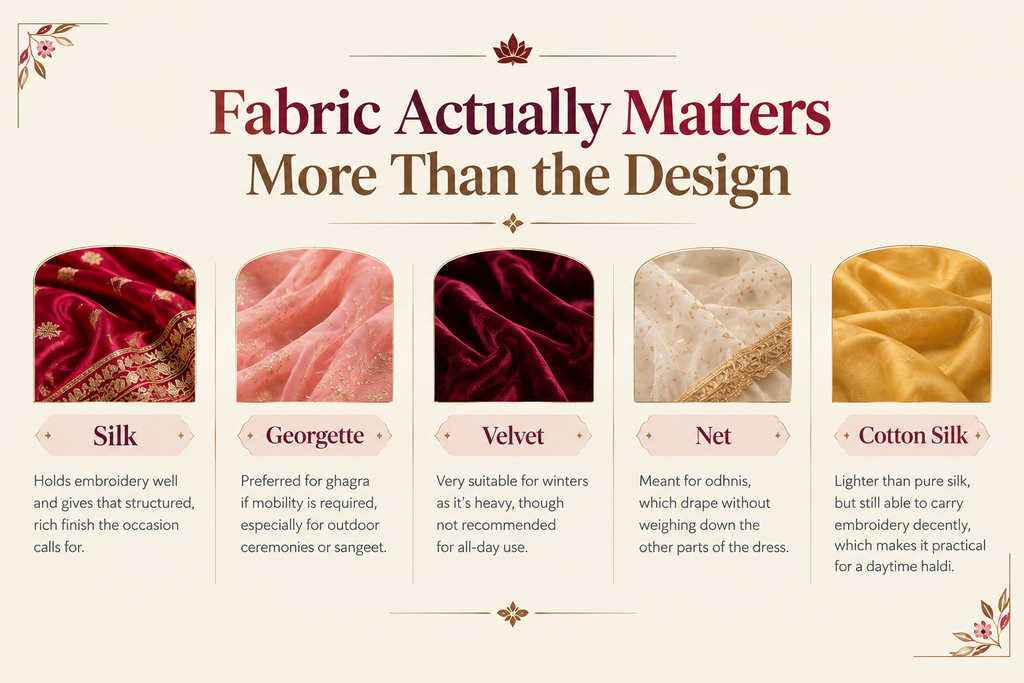
This is the part people skip past, honestly, and then regret it halfway through the wedding. The fabric affects comfort just as much as the look, sometimes more -and it’s a big part of what separates an average outfit from the best rajputi poshak for weddings.
· Silk remains the go-to for the main wedding day – it holds embroidery well and gives that structured, rich finish the occasion calls for.
· Georgette should be preferred to make the ghagra if mobility is required, especially for an outdoor ceremony or sangeet, where some sort of dance is performed.
· Velvet would be very appropriate in winters for the wedding, though it is heavy; therefore, not recommended for all-day use.
· Net is meant for odhnis, which drape without weighing down the other parts of the dress.
· cotton silk sits somewhere in between -lighter than pure silk, but still able to carry embroidery decently, which makes it practical for something like a daytime haldi.
Picking the fabric to match the specific function, rather than the outfit as a whole, tends to work out better. A gorgeous silk poshak that’s perfect for the wedding ceremony can genuinely feel unbearable during a hot afternoon haldi.
Matching the Poshak to Each Wedding Function
Most weddings today aren’t a single-outfit affair anymore, so it helps to think of the best rajputi poshak for weddings function by function.
| Function | Poshak Style | Why |
| Haldi | Cotton or cotton silk, in yellow or bright shades | Calls for something light — it’s informal and usually happens during the day |
| Mehendi | Mirror work poshaks in bold colours | They hold up in photos and match the festive energy |
| Singed | Georgette poshak with gota patti | Light enough to dance in, festive enough to still look the part |
| Wedding Day | Silk or zardozi rajputi poshak, often in red or maroon | Usually calls for something heavier — that’s the traditional expectation |
| Reception | Pastel or more contemporary poshak designs | A lot of brides now lean toward this for a softer, more modern finish |
Getting the Styling Right
Choosing the outfit is really only half the job – styling is what makes it come together or fall a little flat. Even the best rajputi poshak for weddings can fall short without the right styling
Traditional Jewelry
Rajasthani traditional jewelry looks more appropriate on such an occasion: borla, rakhdi, timaniyaan, bajuband. The incorporation of contemporary jewelry items tends to destroy the integrity of the overall look, so it would be advisable to opt for a traditional jewelry set.
Odhni Draping
The way the odhni is draped plays a pivotal role in this case. A more structured way of draping the odhni seems to go well with the wedding, while a more informal way fits the functions that precede the wedding ceremony.
Footwear
As for footwear, it makes more sense to go for gold or matching colored mojaris or juttis instead of high modern heels.
Hair and Makeup
For hair and makeup, a maang tikka with a traditional hairstyle, or something simple like a bun with gajra, tends to work across most poshak designs. Richer fabrics and darker colours on wedding day usually pair well with slightly heavier makeup.
Winter Styling
And if it’s a winter wedding, a light shawl or jacket layered over the poshak works fine without disturbing the silhouette underneath.
Should You Buy or Rent?
For a single wedding function, renting a rajputi poshak often just makes more sense – especially for the heavily embellished ones, which can get expensive fast if bought outright. Buying is worth it when the outfit’s likely to see more use, like a bride’s own wedding poshak, or simpler designs that are easy to wear again later. Whether you buy or rent, the goal stays the same — finding the best rajputi poshak for weddings that suits both your budget and your big day.
Conclusion
A Rajputi poshak is more than just an outfit—it reflects Rajasthan’s rich royal heritage through its traditional kcanchli, ghagra, and odhni. From light cottons for Haldi to mirror work for Mehendi and zardozi for the wedding day, each occasion has its own style. Choosing the best Rajputi poshak means finding the right mix of design, fabric, comfort, and personal style, while modern pastel shades and contemporary touches keep this timeless attire fresh and fashionable.
FAQs
1. What is the difference between a rajputi poshak and a lehenga?
A rajputi poshak is a three-part set — kanchli, ghagra, and odhni — rooted in the tradition of noble Rajput families, whereas a lehenga is a more generic term for a flared skirt outfit without that specific heritage or draping style.
2. How much fabric goes into a rajputi poshak’s ghagra?
Traditional ghagras can use anywhere between 10 and 20 metres of fabric to achieve the signature sweeping flare.
3. Which poshak is best for Haldi function?
Cotton or cotton silk poshaks in yellow or bright shades work best for Haldi, since the function is informal and usually held during the day.
4.Can the same poshak be worn for Mehendi and Sangeet?
It’s not ideal — Mehendi calls for mirror work poshaks in bold colours that photograph well, while Sangeet is better suited to a lighter georgette poshak with gota patti that’s easier to dance in.
5. What kind of poshak is worn on the wedding day?
Wedding day poshaks are usually heavier, made in silk or zardozi work, and typically in red or maroon since that carries the traditional significance.
6. Do brides wear a rajputi poshak for the reception too?
Many brides today prefer pastel or more contemporary poshak designs for the reception, moving away from the traditional heavier looks for a softer finish.
Follow us on Instagram for more Rajputi poshak designs, bridal fashion ideas, and wedding styling inspiration.
Connect with us on Facebook for the latest Rajputi fashion updates, wedding trends, and traditional styling ideas.
For more fashion, wedding, and lifestyle content, you can explore relevant publishing opportunities and guest post resources at Submit Guest Post.