
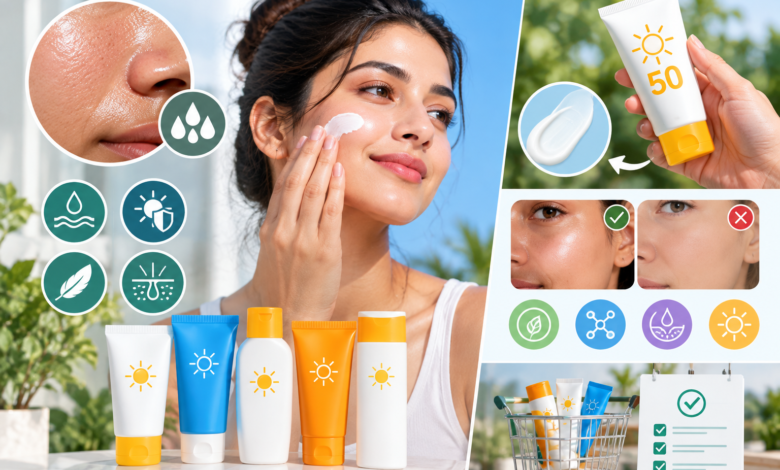
A lightweight, gel or water-based formula that absorbs fast without leaving behind a greasy film – that is what makes the best SPF 50 for oily skin. Oily skin needs sun protection just as much as any other skin type does, but picking the wrong formula often means breakouts and a shiny face within a few hours of stepping out.
This guide walks through what actually makes a sunscreen work for oily skin, and how to narrow down the best SPF 50 for oily skin based on formula, ingredients, and finish.
What Makes a Sunscreen the Best SPF 50 for Oily Skin?
The right match usually combines a mattifying finish, non-comedogenic ingredients, and a texture light enough to sit well under makeup without pilling.
A gel or fluid base tends to work better than a thick cream here, and oil-free labelling is worth checking before anything else. Broad-spectrum protection against both UVA and UVB rays should be non-negotiable regardless of skin type, but for oily skin specifically, the finish matters just as much – something that keeps shine in check for a few hours rather than adding to it. Sunscreen SPF 50 for oily skin works best when it feels almost like a second layer of skin rather than a heavy coat sitting on top.
Why Do Regular Sunscreens Often Fail on Oily Skin?
Most regular sunscreens are built with hydration as the main priority, which usually means heavier oils and emollients that oily skin does not really need.
This mismatch shows up pretty quickly once applied. Pores start clogging within a few hours, and the skin often looks shinier by midday than it did right after application. Breakouts tend to appear along the jawline or forehead first, and makeup starts sliding off as the extra oil builds up underneath it. Picking the best SPF 50 for oily skin means actively steering away from formulas designed for dry or normal skin, even when the SPF number on the label looks exactly the same.
Which Ingredients Should You Look for in Sunscreen SPF 50 for Oily Skin?
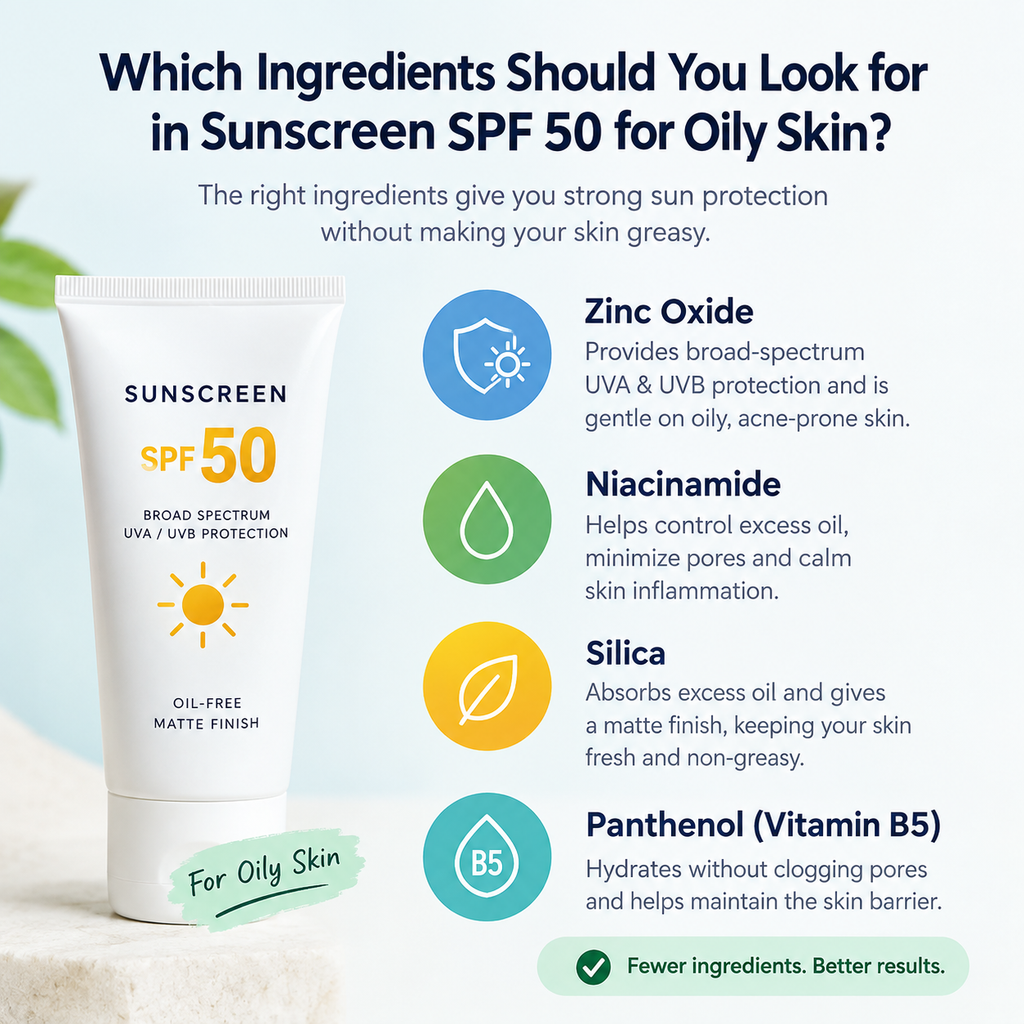
Niacinamide, zinc oxide, and silica are three ingredients that consistently perform well for oily and acne-prone skin.
| Ingredient | Benefit for Oily Skin |
| Niacinamide | Controls oil production, reduces shine |
| Zinc oxide | Gentle, non-irritating physical protection |
| Silica | Absorbs excess oil throughout the day |
| Salicylic acid | Helps prevent clogged pores |
A sunscreen SPF 50 for oily skin built around these ingredients generally holds up better through long working days, especially given how humid Indian weather tends to get.
Which Formula Type Suits Oily Skin the Best?
Gel-based and fluid sunscreens generally handle oil better through the day compared to cream-based versions.
| Formula Type | Suitability for Oily Skin |
| Gel | Excellent – lightweight, quick absorption |
| Fluid/Lotion | Good – slightly more coverage than gel |
| Cream | Poor – often too heavy, can clog pores |
| Stick | Moderate – better for touch-ups than base layer |
Anyone shopping for the best SPF 50 for oily skin should start with gel or fluid formulas, then go through the ingredient list for anything that feels too rich or heavy for daily wear.
How Should You Apply Sunscreen SPF 50 for Oily Skin Correctly?
Applying enough product matters as much as picking the right formula, since most people use far less sunscreen than what SPF 50 protection actually requires.
Roughly two finger-lengths of product are needed to cover the full face properly. Sunscreen should go on as the last step of a skincare routine, right before makeup, and needs reapplying every three to four hours when spending time outdoors. On days when the skin already feels oily by midday, blotting paper before reapplying helps the next layer sit better instead of sliding around. Even the best SPF 50 for oily skin underperforms badly if it goes on too thin or gets skipped during reapplication.
Does the Best SPF 50 for Oily Skin Work Well Under Makeup?
Yes – a lightweight, matte-finish formula sits well under makeup without causing pilling or that extra shine showing through later.
Waiting two to three minutes after applying sunscreen before starting on makeup makes a noticeable difference. A silicone-based primer layered over sunscreen tends to smooth things out further, and it helps to avoid stacking too many products before foundation, since that is usually what causes pilling in the first place. Going with a matte or semi-matte finish over a dewy one also keeps things looking fresher for longer.
Where Can You Find a Reliable Sunscreen SPF 50 for Oily Skin?
A dermatologist-recommended range built specifically for oily and acne-prone skin is usually the safest place to start looking.
Checking product descriptions for terms like non-comedogenic, oil-free, and broad-spectrum helps cut through the guesswork when shortlisting the best SPF 50 for oily skin. For a curated selection built for oily and combination skin, visit Dermacan’s sunscreen collection.
A lightweight, gel or water-based formula that absorbs fast without leaving behind a greasy film – that is what makes the best SPF 50 for oily skin. Oily skin needs sun protection just as much as any other skin type does, but picking the wrong formula often means breakouts and a shiny face within a few hours of stepping out.
This guide walks through what actually makes a sunscreen work for oily skin, and how to narrow down the best SPF 50 for oily skin based on formula, ingredients, and finish.
What Makes a Sunscreen the Best SPF 50 for Oily Skin?
The right match usually combines a mattifying finish, non-comedogenic ingredients, and a texture light enough to sit well under makeup without pilling.
A gel or fluid base tends to work better than a thick cream here, and oil-free labelling is worth checking before anything else. Broad-spectrum protection against both UVA and UVB rays should be non-negotiable regardless of skin type, but for oily skin specifically, the finish matters just as much – something that keeps shine in check for a few hours rather than adding to it. Sunscreen SPF 50 for oily skin works best when it feels almost like a second layer of skin rather than a heavy coat sitting on top.
Why Do Regular Sunscreens Often Fail on Oily Skin?
Most regular sunscreens are built with hydration as the main priority, which usually means heavier oils and emollients that oily skin does not really need.
This mismatch shows up pretty quickly once applied. Pores start clogging within a few hours, and the skin often looks shinier by midday than it did right after application. Breakouts tend to appear along the jawline or forehead first, and makeup starts sliding off as the extra oil builds up underneath it. Picking the best SPF 50 for oily skin means actively steering away from formulas designed for dry or normal skin, even when the SPF number on the label looks exactly the same.
Which Ingredients Should You Look for in Sunscreen SPF 50 for Oily Skin?
Niacinamide, zinc oxide, and silica are three ingredients that consistently perform well for oily and acne-prone skin.
| Ingredient | Benefit for Oily Skin |
| Niacinamide | Controls oil production, reduces shine |
| Zinc oxide | Gentle, non-irritating physical protection |
| Silica | Absorbs excess oil throughout the day |
| Salicylic acid | Helps prevent clogged pores |
A sunscreen SPF 50 for oily skin built around these ingredients generally holds up better through long working days, especially given how humid Indian weather tends to get.
Which Formula Type Suits Oily Skin the Best?
Gel-based and fluid sunscreens generally handle oil better through the day compared to cream-based versions.
| Formula Type | Suitability for Oily Skin |
| Gel | Excellent – lightweight, quick absorption |
| Fluid/Lotion | Good – slightly more coverage than gel |
| Cream | Poor – often too heavy, can clog pores |
| Stick | Moderate – better for touch-ups than base layer |
Anyone shopping for the best SPF 50 for oily skin should start with gel or fluid formulas, then go through the ingredient list for anything that feels too rich or heavy for daily wear.
How Should You Apply Sunscreen SPF 50 for Oily Skin Correctly?
Applying enough product matters as much as picking the right formula, since most people use far less sunscreen than what SPF 50 protection actually requires.
Roughly two finger-lengths of product are needed to cover the full face properly. Sunscreen should go on as the last step of a skincare routine, right before makeup, and needs reapplying every three to four hours when spending time outdoors. On days when the skin already feels oily by midday, blotting paper before reapplying helps the next layer sit better instead of sliding around. Even the best SPF 50 for oily skin underperforms badly if it goes on too thin or gets skipped during reapplication.
Does the Best SPF 50 for Oily Skin Work Well Under Makeup?
Yes – a lightweight, matte-finish formula sits well under makeup without causing pilling or that extra shine showing through later.
Waiting two to three minutes after applying sunscreen before starting on makeup makes a noticeable difference. A silicone-based primer layered over sunscreen tends to smooth things out further, and it helps to avoid stacking too many products before foundation, since that is usually what causes pilling in the first place. Going with a matte or semi-matte finish over a dewy one also keeps things looking fresher for longer.
Where Can You Find a Reliable Sunscreen SPF 50 for Oily Skin?
A dermatologist-recommended range built specifically for oily and acne-prone skin is usually the safest place to start looking.
Checking product descriptions for terms like non-comedogenic, oil-free, and broad-spectrum helps cut through the guesswork when shortlisting the best SPF 50 for oily skin. For a curated selection built for oily and combination skin, visit Dermacan’s sunscreen collection.
FAQs
Does sunscreen cause more oiliness on already oily skin?
No, SPF 50 works fine for oily skin as long as the formula is lightweight and non-comedogenic.
How often should sunscreen be reapplied on oily skin?
Every three to four hours, or sooner if the skin feels excessively oily or sweaty.
Does sunscreen cause more oiliness on already oily skin?
Only when the formula is too heavy; gel-based sunscreens usually help keep shine under control instead.
Can sunscreen replace moisturiser for oily skin?
Not entirely, though a lightweight gel sunscreen can work as a final step after a light moisturiser.
What is the best SPF 50 for oily and acne-prone skin?
Gel-based, non-comedogenic formulas with niacinamide or zinc oxide tend to work best for this skin type.
Follow us on Instagram & Facebook for sunscreen tips, oily-skin care, beauty advice, and more.
Read Also: Check out our guide on https://submitguestpost.in/sodium-hyaluronate-eye-drops/